Tekijä: FinSteam Ab Oy

  • What Is the Finnish Löyly Experience?

    FinSteam full logo color

    sauna heaters expanding sauna culture about finsteam home sauna tents distributors articles Finsteam q&a eNGLISH SVENSKA SUOMEKSI Why Choose finnish sauna? ENG SWE FIN

    What Is the Finnish Löyly Experience?

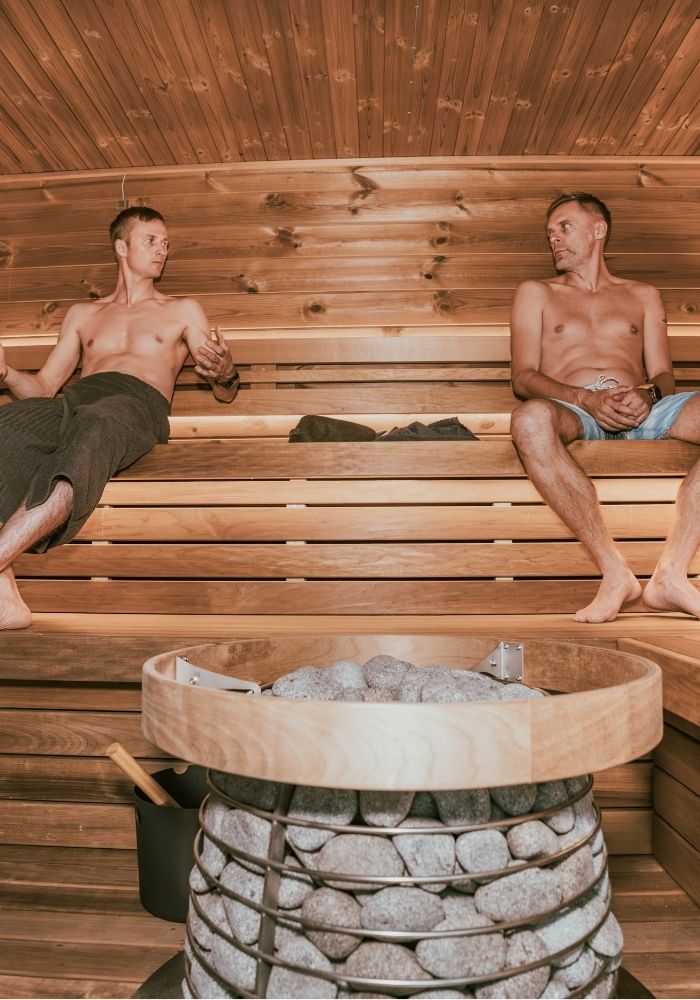
    While in a previous article I wrote about the anatomy of a Perfect Löyly, now I want to tell you what the Finnish Löyly Experience means.

    In a Finnish sauna, you do not “go into a hot room” , we go there to enjoy Löyly.

    “Löyly” is a Finnish word that has no complete translation into any other language. That is why, in this article as well, I will use it by its proper name.

    Contrary to many beliefs, Löyly is not just the heat and humidity present in a sauna. Good Löyly is an experience, a space and a moment where the body, the mind, and the environment understand each other without words.

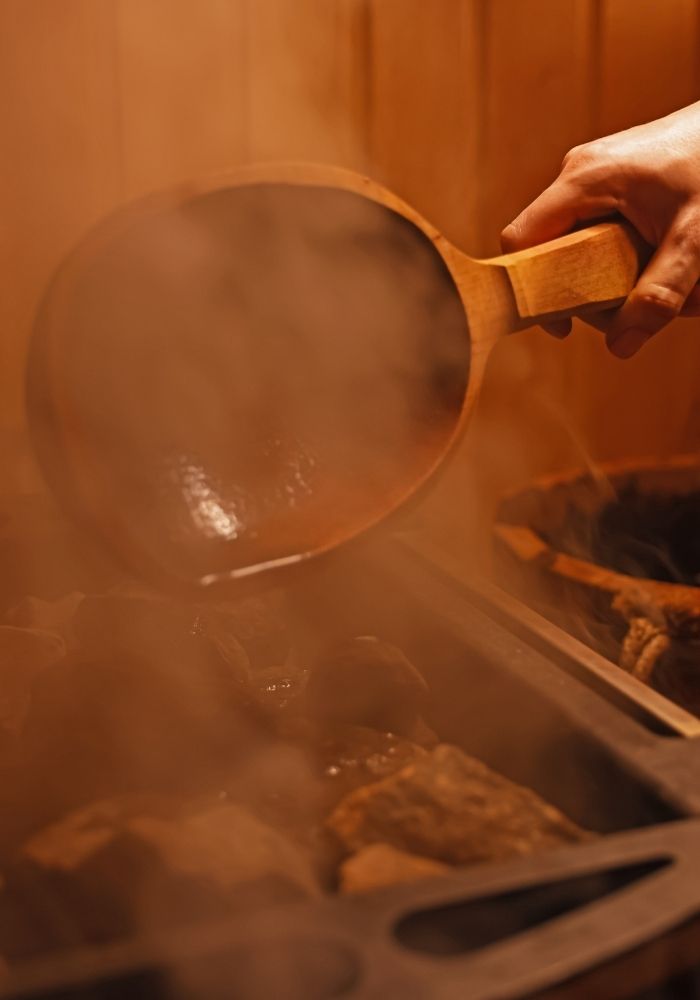
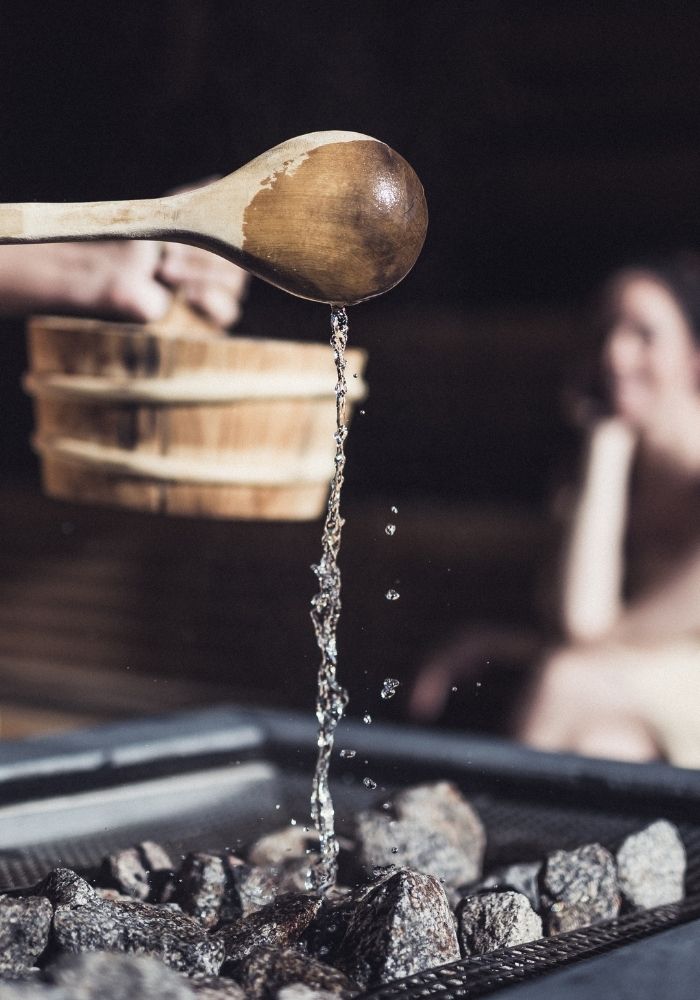
    A true Finnish Löyly experience begins when the sauna’s heat, humidity, oxygen, and the human being are in perfect balance, and when the water thrown onto the heater does not explode against your face, but instead rises as a soft, living, and breathable airflow that circulates throughout the entire sauna space, caresses your skin, and forces you to… stop, enjoy, and breathe deeply.

    Good Löyly never attacks. It seduces.

    What should Löyly in a Finnish sauna feel like?

    • Pleasantly humid, not wet
    • Hot, but never burning
    • Comfortably breathable, never suffocating
    • Smooth and balanced, not aggressive and harsh

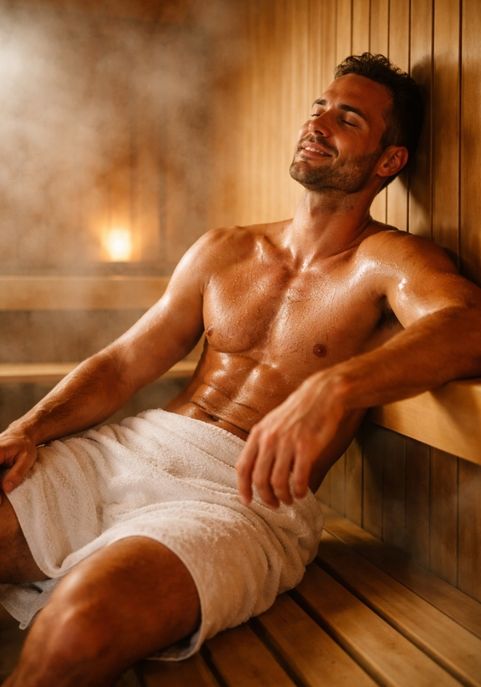
    You know you are experiencing good Löyly when you feel it wrap itself around your neck and shoulders like a warm, invisible blanket, and finally caress your entire body.

    Breathing is easy. The body relaxes. Thoughts fall silent.

    This is no coincidence. This is centuries of Finnish sauna culture refined into an understanding of how Löyly is meant to be experienced and felt…  it is absolutely not about how much heat a person can endure.

    Löyly is not aggressive.
    It does not force.
    It seduces you.

    What about totally shit Löyly?

    First and foremost, it’s important to understand that not all hot air in a sauna is Löyly. And not every sauna is a good sauna, even if it features beautiful benches and a stylish heater.

    And it probably comes as no surprise that shit Löyly is the exact opposite of good Löyly. It´s Extremely dry and skin burning, aggressive and breath blocking.

    Shit Löyly feels as if the oxygen is running out. The skin tightens. The ears and head start burning, and the brain screams for you to press your head between your knees or run out of the sauna. Right now!

    In this kind of Sauna, heat does not circulate; it stands still and beats you down. The heater does not communicate with the sauna space, it fights against it.

    This is not a Finnish Löyly Experience.

    It is a survival exercise.

    Good Löyly requires skill and calm – not luck and haste

    How do you know that there is a chance for the perfect Löyly experience?

    When the foundation for the sauna experience is right:

    • the heater is correctly sized for your sauna and designed to produce soft, humid heat
    • the sauna’s ventilation is balanced and functions properly
    • the sauna temperature is under your control
    • and you understand that water is poured onto the heater calmly, with feeling – not thrown with rage and anger.

    In Finnish sauna culture, Löyly is listened to and respected. You engage in a dialogue with it, adjust it when needed, and above all, give it time and space.

    In the end, Löyly is not just the perfect steam rising from the heater or the appropriate number on the sauna thermometer.

    It’s a feeling in your body.

    How do you recognize the perfect Löyly experience?

    Uno. When you step into the sauna, sit on the benches, and very quickly feel: This is a good place for me to be.

    Dos. When the heat of the sauna does not force you to escape, but seduces you to stay.

    Tres. When, as you take a sauna, your body grows tired in a good way and you feel both your mind and body relax and cleanse.

    Cuatro. And when you leave the sauna, you feel your body light but still deeply relaxed and ready to rest. Your skin feels soft and clean, you can feel how your blood circulation has increased. Stress and worries have evaporated into the Löyly, your thoughts feel clearer and the world seems brighter. The increase in endorphin, dopamine and serotonin levels after the sauna can even cause euphoric, happy feelings.

    That is Finnish Löyly.
    That is a true Finnish Löyly Experience.

    And once you really get to experience it properly, you’ll never want to settle for a shitty sauna again.

    That is why we have invented and built the FinSteam gas sauna heater. So that Anyone. Anytime. Anywhere. can experience perfect Löyly, a Finnish Löyly Experience.


    In the end, even the perfect sauna and the ultimate Löyly experience are matters of personal taste. What you’ve read here is my own feeling and opinion, shaped by 52 years of sauna bathing and hundreds of very different saunas.

    That said, I can say this honestly, without exaggeration, without conflict of interest, and without any sales pitch: the Löyly produced by the FinSteam Botnia81 gas heater easily earns a place in my personal all-time Top 3 sauna experiences and it may well take the top spot.

    Every sauna has its own soul, and every sauna does its best to give the bather the best possible Löyly. This is simply one man’s experience, which I share with respect to all saunas in the world.

    I wish you deeply satisfying, unhurried, and memorable Löyly moments. And if you ever get the chance to try our gas heater yourself, take it.
    You will be surprised. Without a doubt!

    9.2.2026 by Toni Hannukainen

    FinSteam Oy / Saunística Domestic & Export sales
    Distributor networks
    Myynti Suomi
    © 2025 FinSteam Oy. All rights reserved Product Development Per toni@finsteam.fi +358 40 737 31 27 +34 656 87 49 38 Product Development & Manufacturing info@finsteam.fi per@finsteam.se Benny +358 50 563 3432 Toni Anders +358 50 345 2747 FinSteam Ab Product Development Stephan stephan@finsteam.se +46 70 828 5225 Location:
    Lingonvägen 11
    SE-44242 Kungälv
    Sweden
    Location:
    Penviksvägen 4
    FI-68600 Pietarsaari
    Finland
    +46 70 304 2228 Location:
    Lastvägen44
    SE-98138 Kiruna
    Sweden
    FinSteam Oy Location:
    Calle Miguel Hernández 3
    ES-29120 Alhaurin el Grande
    Spain
    © 2025 FinSteam Oy. All rights reserved
  • FinSteam Gas Sauna Heater and Gravity (Natural) Ventilation

    FinSteam full logo color

    sauna heaters expanding sauna culture about finsteam home sauna tents distributors articles Finsteam q&a eNGLISH SVENSKA SUOMEKSI Why Choose finnish sauna? ENG SWE FIN

    FinSteam Gas Sauna Heater and gravity ventilation

    The importance of ventilation in a gas-heated sauna

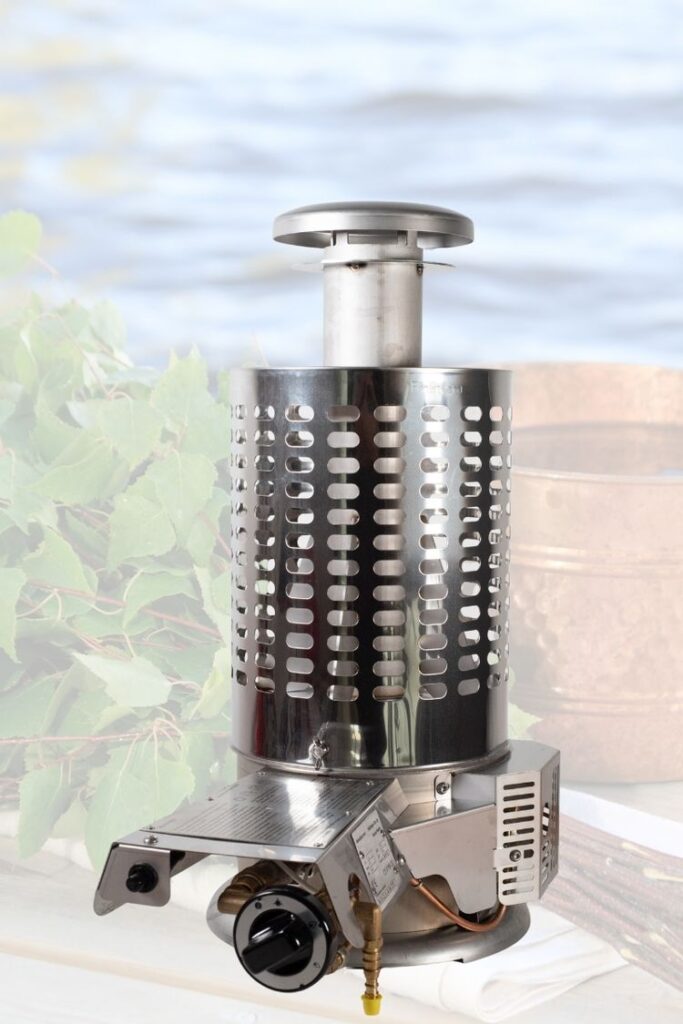
    Ventilation in a gas-heated sauna is particularly important for both safety and sauna bathing comfort. The FinSteam Botnia81 gas sauna heater does not require a chimney, and its combustion gases (mainly carbon dioxide and water vapour) circulate within the sauna’s air flow.

    This means that ventilation must ensure both a sufficient supply of oxygen for the gas sauna heater flame and bathers, and the removal of combustion products. Properly designed gravity ventilation can effectively replace a chimney, provided it is implemented correctly.

    With correctly installed ventilation, a sauna equipped with a gas sauna heater remains safe, fresh, oxygen-rich, and dries quickly after use, preventing musty odours and moisture damage.

    FinSteam sauna heaters are also equipped with a safety system (ODS) that automatically shuts off the gas supply and flame if the oxygen level in the sauna room air drops too low. However, this safety system should never be relied on alone. Properly designed supply and exhaust air openings ensure that oxygen does not become depleted and that the ODS does not shut down the heater unnecessarily.

    We strongly emphasise that FinSteam gas sauna heaters must only be used in saunas with ventilation implemented according to our instructions.

    Differences between heater types

    It is useful to understand the differences between various sauna heater types:

    Wood-burning sauna heater
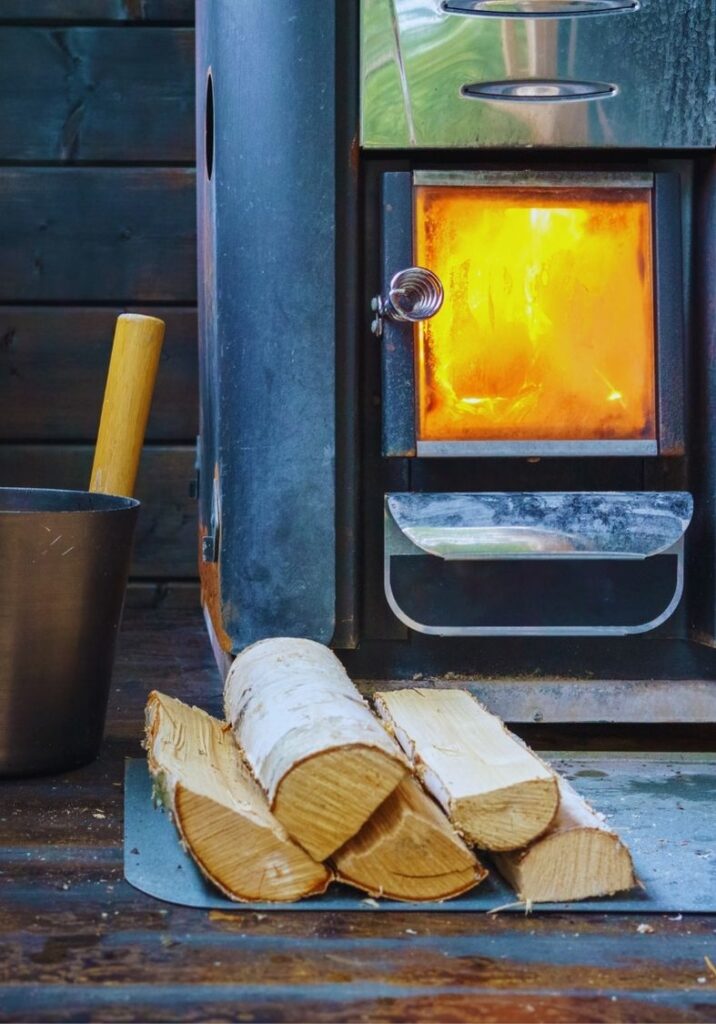
    A wood-burning heater has a chimney that acts as an efficient “extractor,” drawing air out of the sauna for combustion. For example, a wood-burning heater may consume approximately 8 m³ of air when burning 1 kg of wood. With 10 kg of wood, about 20 m³ of sauna air could theoretically be exchanged four times during heating. This natural draft helps ventilation, although it does not alone guarantee perfect air exchange.

    Electric sauna heater
    An electric heater does not consume oxygen during heating, so ventilation relies entirely on separate ventilation openings or even mechanical ventilation.

    Gas sauna heater
    A gas sauna heater is a hybrid solution: like a wood-burning heater, it consumes oxygen during combustion, but without a chimney the combustion gases remain in the sauna. In other words, a gas sauna heater does not create active draft to the outside; instead, it pushes hot air into the sauna and generates internal thermal air currents.

    It is important to note that FinSteam gas sauna heater consumes oxygen cleanly during combustion and produces moisture (H₂O) and carbon dioxide (CO₂) as combustion products, which are not toxic.

    For this reason, it is essential that sufficient fresh supply air can flow into the sauna and that the heated circulating air can exit through a correctly designed exhaust air vent.

    If gravity ventilation is too weak, the sauna air can quickly become enriched with excessive carbon dioxide and moisture. In such conditions, incomplete combustion could produce carbon monoxide (CO). However, the ODS safety system of FinSteam heaters will shut down the heater before the sauna becomes life-threatening.

    Principles of gravity (natural) ventilation

    Gravity, or natural, ventilation is based on temperature differences and convection – the circulation created by temperature differences, where warm air rises upward and cooler replacement air flows in from below.

    The effectiveness of ventilation is influenced by many factors, including:

    • Temperature difference between outdoor and indoor air

    • Difference in air humidity

    • Height difference between ventilation openings

    • Size, shape, placement, and distance of vents from the heater

    • Wind direction and strength

    Together, these factors create the pressure differences and airflows required for gravity ventilation.

    1. Temperature difference between outdoor and indoor air

    Effect: The greater the temperature difference, the stronger the natural ventilation.

    The main driving force of gravity ventilation is convection: warm air is lighter than cold air and rises upward. If the sauna temperature is, for example, +80 °C and the outdoor temperature is +5 °C, a clear pressure difference is created, drawing cool replacement air in and exhausting hot air through an outlet vent near the ceiling. The temperature difference affects both airflow speed and air volume, as warm air expands and tends to occupy a larger space.

    Practical example: In winter conditions, gravity ventilation works more effectively than in summer heat because the temperature difference between indoor and outdoor air is greater. This can result in stronger draft at the exhaust opening without any mechanical assistance.

    Very strong gravity ventilation caused by a large temperature difference may also affect how the sauna heats up in cold weather. In such cases, slightly reducing (but never completely closing) the exhaust airflow during heating can help the sauna warm up better. During bathing, however, care must be taken to ensure that exhaust airflow is not too restricted, so there is sufficient oxygen for clean gas combustion and for bathers to breathe.

    2. Difference in air humidity

    Effect: Moist air is lighter than dry air and therefore rises more easily.

    Although humidity is not as strong a driver as temperature, it still affects air density, as moisture reduces air density. During bathing, sauna air becomes very humid. This moist air rises upward and exits, reinforcing gravity-driven exhaust airflow. A humidity difference relative to outdoor air enhances exhaust flow.

    Practical example: After throwing water on the stones, humid air rises to the ceiling, circulates according to airflow patterns, and exits more quickly through a well-positioned exhaust opening. If the exhaust opening is too small or too low, moist air will not exit efficiently, airflow inside the sauna will be insufficient, and hot air may stagnate, making breathing heavy and uncomfortable.

    3. Height difference between ventilation openings

    Effect: A greater height difference strengthens and improves air circulation.

    The effectiveness of gravity ventilation increases with the vertical distance between the supply and exhaust openings. The supply air vent should be as low as possible, and the exhaust air vent as high as possible.

    The effect of height difference is mathematically proportional to the pressure difference created by thermal expansion of air. For example, a 2-metre height difference in a sauna with a 60 °C temperature difference to outdoor air can generate several pascals of draft force, sufficient to move tens of litres of air per second through a correctly sized and positioned exhaust vent.

    Practical recommendation: Place the centre of the supply air opening approximately 25–40 cm above the floor, and the centre of the exhaust air opening less than 25 cm below the ceiling. This creates at least a 1.5 m height difference, sufficient to generate effective gravity airflow.

    4. Size, design, and distance of vents from the heater

    Size

    Effect: A vent that is too small restricts airflow; a larger vent is not a problem if it is adjustable.

    Gravity ventilation works only if air has sufficient space to flow. For FinSteam gas sauna heaters, the supply air opening area should be at least 350 cm² (e.g. a rectangular 200 × 175 mm opening or a round vent of approximately Ø210 mm), and the exhaust air opening at least 200 cm² (e.g. 200 × 100 mm rectangular or approximately Ø160 mm round).

    If a vent is, for example, only Ø100 mm (≈78 cm²), air exchange will be insufficient. Also consider the airflow resistance caused by grilles, louvers, and filters, which can reduce the effective free opening area by up to half.

    Remember that many ventilation vents, including those in the FinSteam sauna tent, are adjustable. Since gravity ventilation conditions vary (e.g. frost vs. summer heat, calm vs. windy weather), the ability to adjust vents as needed is important.

    Keep vents at least slightly open at all times so that a small amount of replacement air always enters the sauna, keeping it fresh even between uses. Most importantly, vents must never be permanently blocked. A sauna is not a fully airtight space, nor should it be made one.


    Design

    Supply and exhaust openings can be rectangular, square, or round. For rectangular openings, ensure they are wider than they are tall, with a maximum aspect ratio of 1:2.5 (width no more than 2.5 times the height). A recommended ratio is between 1:1 and 1:2.

    If vents are connected to ventilation ducts, remember that gently angled, unobstructed ducts improve airflow, while sharp bends and narrow restrictions hinder it. The vent and associated duct should be as straight and smooth as possible. A gentle 45° bend is far better than a 90° turn. Smooth, round ducts create less friction than rough or square ones.

    Location and distance from the heater

    The supply air opening should be located near the heater so that incoming fresh air mixes with the air heated by the heater and supports clean gas combustion. This allows oxygen-rich air to spread warmly throughout the sauna without creating cold drafts.

    A good practical guideline when using a FinSteam gas sauna heater is to place the supply air vent as close to the heater as possible, with the lower edge of the opening at the level of the gas burner or slightly above it. This allows the heater to utilise oxygen for combustion and immediately warm the incoming air, preventing cool air from circulating along the floor.

    This arrangement also combines the benefits of low-level fresh air supply with the improved efficiency created by height difference between ventilation openings.

    Some sauna construction guidelines suggest that supply air should not be placed very low or close to the firebox to prevent all fresh, oxygen-rich air from being consumed by combustion. This is not correct, as a gas burner consumes only the amount of oxygen chemically required for combustion. There will be sufficient oxygen for other purposes if the supply air opening is large enough.

    The exhaust air opening in a gas-heated sauna should be placed as high as possible, since warm, humid air accumulates near the ceiling. The best location is on the wall opposite the heater, close to the ceiling. Alternatively, a ceiling-mounted exhaust vent can be used, also positioned diagonally opposite the heater. The key point is that the exhaust opening must be clearly higher than the supply opening to allow temperature and height differences to generate gravity-driven draft.

    Placing supply and exhaust openings on opposite sides of the sauna also ensures that air heated by the heater circulates throughout the entire steam room, including the bench seating area. Adequate oxygen improves bathing conditions: the steam feels softer and breathing is easier when oxygen does not run out.

    5. Wind direction and strength

    Effect: Wind can either enhance or disturb ventilation, depending on its strength, direction, and the protection of outdoor vents.

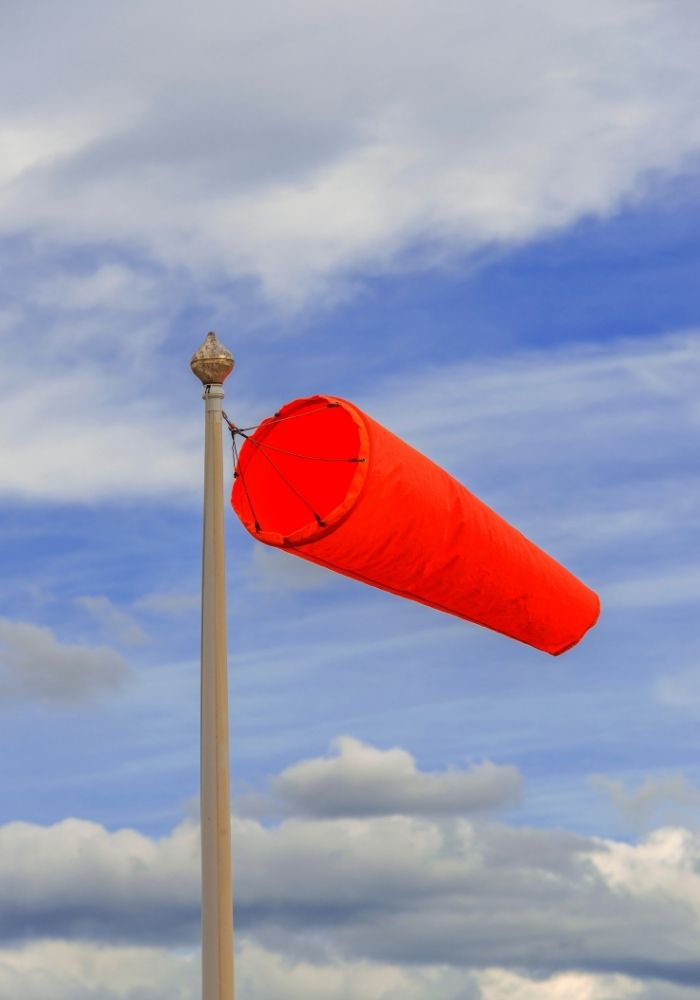
    Gravity ventilation works best in relatively calm conditions, but wind can also act as an enhancer. If the outdoor exhaust opening is on the leeward (low-pressure) side, wind can help draw exhaust air out more efficiently.

    Conversely, if the supply air opening is on the windward side, wind can force air into the sauna quite strongly. This can be beneficial or problematic, depending on the situation.

    If a ventilation opening is directly exposed to wind without protection, several issues may occur:

    • Exhaust airflow may be blocked if wind prevents air from exiting

    • Supply air may enter with excessive pressure, bringing in too much cold air and making heating more difficult

    • In the worst case, airflow may reverse direction, causing exhaust air to blow back into the sauna

    Practical solution: In fixed sauna buildings, use wind-protected outdoor grilles and canopies, and place outdoor vents on the sheltered side of the building when possible. In tent saunas, position or orient the sauna to minimise wind impact. If wind conditions are too strong or stormy, it is better not to heat a tent sauna that day.

    Summary of gravity ventilation

    Gravity ventilation is sensitive to these factors, and they interact as a combination. For example, a large temperature difference is of little help if there is no height difference between vents. Well-placed vents will not help if they are too small or if strong wind pushes directly against them. It is essential to consider all these factors together to ensure reliable sauna ventilation in all conditions.

    Special considerations with a FinSteam gas sauna heater

    Using a gas sauna heater introduces specific ventilation requirements. As noted, all combustion gases remain in the room air, so sufficient ventilation is the only way to remove them. The FinSteam gas sauna heater is designed to be safe for indoor saunas, provided ventilation is implemented according to instructions.

    In practice, this means following the principles described above: correctly sized vents placed low and high, kept open during bathing. A gas sauna heater must never be installed in a completely airtight, unventilated space. Additionally, the gas cylinder must always be placed outside the sauna, in a well-ventilated location. This ensures that any potential valve leak or hose failure does not direct gas directly into the small steam room.

    From a safety perspective, additional reassurance may also be considered: carbon monoxide and carbon dioxide alarms (CO and CO₂ detectors) are not mandatory but can provide peace of mind in a gas-heated sauna. A properly functioning sauna equipped with a gas sauna heater is, however, proven to be safe when ventilation is adequate.

    FinSteam heaters are CE type-approved in this respect and have an EU type-examination certificate in accordance with the EU Gas Appliances Regulation (EU/2016/426).

    Ventilating the sauna after sauna bathing

    Finally, a reminder: always ventilate the sauna thoroughly after use.

    After bathing, leave ventilation openings fully open and, if necessary, leave the door slightly ajar so that both moisture and any remaining combustion gases can be vented out. Gravity ventilation continues to operate after bathing, especially if the heater is still warm and drawing air. Proper ventilation dries the benches and structures, preventing mould and harmful microbial growth.

    In summary:
    The FinSteam gas sauna heater offers a chimney-free sauna experience, but it requires carefully designed gravity ventilation. Ensure sufficiently large and correctly positioned supply and exhaust openings so that your sauna is safe, fresh, and pleasant. A well-ventilated sauna rewards its users: steam remains soft and oxygen-rich, and the sauna itself lasts longer, staying cleaner and drier.

    With correctly implemented ventilation, a FinSteam gas-heated sauna is not only a unique opportunity but also excellent in use, combining the warmth of a real flame and the atmosphere and steam of a traditional wood-burning sauna with modern ease and safely.

    14.1.2026 by Toni Hannukainen

    FinSteam Oy / Saunística Domestic & Export sales
    Distributor networks
    Myynti Suomi
    © 2025 FinSteam Oy. All rights reserved Product Development Per toni@finsteam.fi +358 40 737 31 27 +34 656 87 49 38 Product Development & Manufacturing info@finsteam.fi per@finsteam.se Benny +358 50 563 3432 Toni Anders +358 50 345 2747 FinSteam Ab Product Development Stephan stephan@finsteam.se +46 70 828 5225 Location:
    Lingonvägen 11
    SE-44242 Kungälv
    Sweden
    Location:
    Penviksvägen 4
    FI-68600 Pietarsaari
    Finland
    +46 70 304 2228 Location:
    Lastvägen44
    SE-98138 Kiruna
    Sweden
    FinSteam Oy Location:
    Calle Miguel Hernández 3
    ES-29120 Alhaurin el Grande
    Spain
    © 2025 FinSteam Oy. All rights reserved
  • The Unwritten Rules of Finnish Sauna Culture

    FinSteam full logo color

    sauna heaters expanding sauna culture about finsteam home sauna tents distributors articles Finsteam q&a eNGLISH SVENSKA SUOMEKSI Why Choose finnish sauna? ENG SWE FIN

    The Law of the Sauna Benches – The Unwritten Rules of Finnish Sauna Culture

    First of all, this article is quite long, so I hope you’ll have the stamina to read it all the way to the end.

    Finland has a population of around 5.5 million people, and an estimated 3.3 million saunas. The sauna is an inseparable part of Finnish life: it is often said that in Finland “we sit on the sauna benches before we can walk or talk.” For Finns, sauna bathing is almost sacred, governed by many unwritten rules. These rules are passed down from generation to generation almost automatically, and nearly every Finn learns them as a child as part of their sauna upbringing. To outsiders they may seem confusing, but to Finns they are self-evident. It is therefore no surprise that Finnish sauna culture was added to UNESCO’s list of Intangible Cultural Heritage of Humanity in 2020.

    There is a special atmosphere in the sauna, carefully protected by these unwritten laws. Many Finns see the sauna as a near-sacred space, a kind of “church of nature,” where both body and mind are cleansed.

    A good sauna is a place where worries are washed away and the soul can rest. Below, I introduce a set of sauna “legal clauses” that Finns usually follow without ever stating them aloud. In the analysis of each rule, I explain why these customs are part of the Finnish sauna tradition.

    Peace in the Löyly – Arguments do not belong in the Sauna

    According to an old proverb, “one should behave in the sauna as in church,” meaning calmly and respectfully.

    Sauna bathing is a moment of relaxation and purification, so everyday quarrels and loud arguments are left outside the löyly room. Arguments never belong in the sauna. If topics such as relationship problems or politics arise, even these should be discussed calmly so that the conversation does not escalate into a heated dispute next to the hot stove. Finns usually consciously avoid sensitive topics when sauna bathing with strangers. On the sauna benches, the aim is to preserve sauna peace: an unhurried, safe atmosphere where everyone can relax.

    Historically, the sauna was even considered a sacred place. In the old days, people believed that a sauna elf guarded the sauna and would become angry if there was shouting or swearing inside. Stories tell that if someone behaved particularly badly in the sauna, the sauna elf might fly into a rage and even burn the whole sauna down. This folk belief reflects how highly sauna peace was valued. “You must not shout, or the sauna elf will get angry” is a rule many children, myself included, were taught. When a person enters the sauna, they are expected to leave everyday aggression and haste behind. One sits calmly, almost reverently, so that everyone can enjoy the gentle warmth of the löyly.

    In practice, this means that people speak quietly in the sauna…. or, knowing Finns, sometimes not at all.

    Sauna farts – Absolutely forbidden

    Let’s admit it: the topic may provoke laughter, but it must be said aloud. Passing gas in the sauna is not only bad manners; it is also disrespectful toward others and therefore forbidden. In a small, hot space, smells intensify, and foul air floating among the löyly can ruin the entire sauna experience.

    This rule, too, relates to the sauna’s special atmosphere of cleanliness and calm. Traditionally, the sauna has been a place of washing, almost a sacred chamber, where hygiene is respected. No one wants their enjoyment spoiled by unhygienic behavior. Therefore, polite sauna manners apply, and personal sound effects and odors are kept to private spaces. This is about both preventing unpleasant smells and maintaining general tact. A little restraint is a small price to pay for keeping the shared löyly moment enjoyable.

    What is said in the Sauna stays in the Sauna

    Conversations on the sauna benches can often be unusually deep. In the heat of the löyly, people relax and often open up about things they might not otherwise talk about. Finnish sauna culture follows an unwritten code of honor: “Like in Las Vegas, so in the sauna, what is said in the löyly stays there.”

    This means that personal revelations or sensitive discussions heard in the sauna are not shared elsewhere. If someone opens up on the sauna benches, others respect this by keeping the conversation confidential.

    This rule originates from the sauna’s role as a private communal space. In ancient Finnish tradition, the sauna was a place where people were born, illnesses were treated, and even the dead were washed, life’s most intimate moments occurred there. For this reason, the sauna was surrounded by an implicit promise of trust. Sorrows, joys, and pains were shared on the benches and listened to with compassion. Even today, many Finns believe that sauna evenings create a special bond between those present. What a friend reveals from the heart in the sauna stays within that circle. The sauna acts as a guardian of trust and people leave feeling lighter because they were able to speak and be heard without fear of gossip.

    The soul pens on the Sauna benches – The Sauna as Finland’s confessional

    The sauna is Finland’s confessional. This expression refers to the way the sauna functions much like a confessional in Catholic tradition: it is a place where people entrust their deepest thoughts and cleanse burdens from the heart. Especially for Finnish men, the sauna has traditionally been a place where emotions and difficult topics can be discussed more freely. In everyday life, a taciturn Finnish man may truly open his mouth only once he sits on the sauna benches with friends and then the topics are often serious. Amid the löyly, heartbreaking father–son conversations have taken place, relationship worries have been discussed among friends, and personal successes shared that one might not dare to boast about elsewhere.

    Why does the sauna encourage openness?

    One explanation is its relaxed, egalitarian environment, which I will discuss further later in this article. When physical formalities: clothes and titles are removed, many mental barriers disappear as well. People sit literally in the same space, sweaty and naked, which creates a sense of togetherness and equality. The calm atmosphere and physical well-being also relax the mind. It becomes easier to speak honestly and to listen. It is not uncommon for a famously reserved Finnish man to open up to a friend in the sauna in ways he never would at a bar counter or an office coffee table.

    In the past, people said that “the sauna also washes the mind clean.” This is a kind of löyly therapy. As sweat flows and the heat relaxes the body, speech comes from the heart. It is no coincidence that many Finns consider sauna evenings the best moments for family discussions or for bringing friends closer together. The sauna is our confessional, without priests or ceremonies, simply and authentically.

    However, this confessional effect only works if trust exists, meaning that what is said truly stays within the sauna walls. That is why the sauna has been a place where conflicts are resolved, important decisions made, and even business deals struck and peace built.

    Titles are left with the clothes – in the Sauna everyone is equal

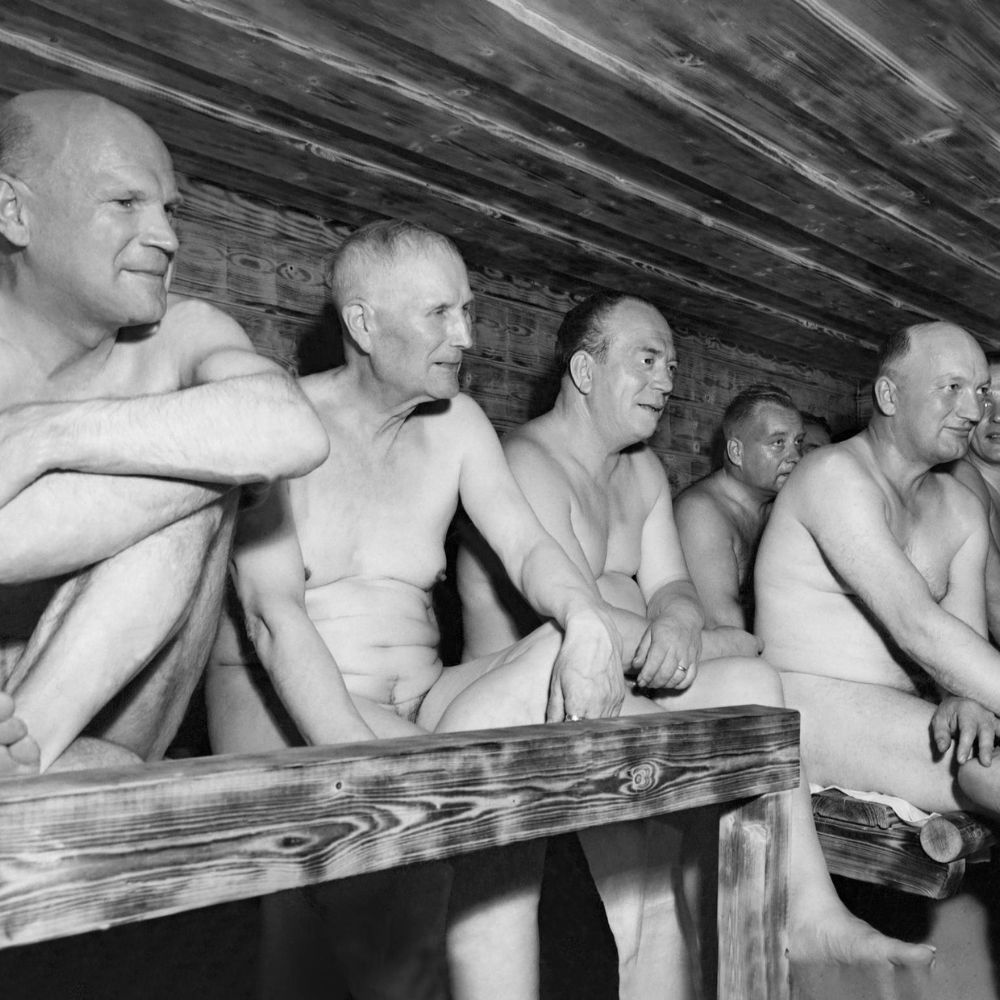
    The sauna embodies democracy and equality. When a person enters the sauna, they remove not only their clothes but also their rank and titles. In the sauna, there are no titles or social classes, A Finnish saying states ”In the sauna, everyone is equal”. In practice, this means that in shared löyly, a CEO, a construction worker, a president, and a student sit side by side simply as people, enjoying the same sweaty pleasure.

    Legendary President Urho Kekkonen famously used the sauna’s equalizing power in diplomacy. He often invited both domestic politicians and foreign leaders to sauna, reportedly saying that problems are easier to discuss on the sauna benches because everyone is equal there. “In the sauna there are no superpowers or small countries, no masters and servants. No one can hide politics up their sleeve when the sleeves are off,” Kekkonen aptly observed.

    Promises made amid nudity and löyly were easier to keep, because they were made human to human, without everyday roles. From this emerged the concept of sauna diplomacy: The idea that even opposing parties can more easily find common ground in the sauna.

    This principle of equality also appears in everyday sauna moments. In workplace sauna evenings, hierarchies often dissolve: a boss and an employee may talk casually, without the stiffness imposed by titles. On the sauna benches, everyone is simply a person among others. This builds trust and team spirit. There is even a Finnish saying, “I didn’t recognize you with your clothes on,” humorously describing how familiar someone becomes naked in the sauna, so much so that they seem almost unrecognizable when dressed.

    This unwritten law explains why Finns are rarely embarrassed about mixed-gender sauna bathing: no one feels “above” or “below” anyone else. When social status differences are symbolically wiped away, it becomes easier to meet others without prejudice.

    Naked in the Sauna – But without hidden intentions

    One of the best-known and most surprising features of Finnish sauna culture for foreigners is the complete naturalness of nudity. In the sauna, nudity is normal and has nothing to do with sex. For Finns, it is self-evident to remove clothes before going to the sauna. Family members, friends, and sometimes mixed groups sauna naked together, and there is nothing strange about it. Naked, but not inappropriate, describes the situation well: no naked body is an object of staring or judgment in the sauna. Every body is equally valuable in the löyly, and nudity is seen as a natural part of sauna bathing.

    For many foreigners, especially those from more conservative, Catholic-influenced cultures, this relaxed attitude toward nudity can be difficult to understand. For example, certain American anxieties around nudity partly stem from Catholic thinking, where nudity is associated with shame or sin. In Finland, by contrast, the sauna has always been an extension of the home: a place for washing and relaxation, where removing clothes is a practical act, not a moral statement. There are no lewd jokes, suggestive glances, or propositions in the sauna. Such behavior is extremely inappropriate and a blatant violation of sauna peace.

    Of course, Finns understand if a foreigner feels shy. In many public saunas, tourists are allowed to wear a swimsuit or at least keep a towel wrapped around them if that makes them more comfortable. There is even a playful saying: “You go to the sauna to show off the magnificent naked Finnish body”—an exaggeration meant to convey that there is no need for embarrassment, as no one is judging.

    “Even in a public sauna, no one needs to be ashamed of their body”; ultimately, we all look quite similar without clothes. Nudity is seen as equalizing: anyone can relax when there is nothing to hide… quite literally.

    It is important to note that this norm of nudity does not imply coercion. Finnish etiquette is flexible: if someone prefers to wear a towel, it is usually not made into an issue. Especially in mixed-gender saunas among friends, it may be agreed that towels or swimsuits are used if that increases everyone’s comfort. More often, however, trust prevails: when everyone understands that nudity has no sexual meaning, sauna bathing naked feels natural, like Adam and Eve, but with completely innocent minds. Finns grow up with this from a young age; children learn early on that being naked in the sauna is nothing special.

    The contrast with the rest of the world can be striking. A Finnish friend who studied in USA once told how american students asked in disbelief, “Why are people naked in the sauna? Do you have sex there?” The question amuses Finns, because nudity in the sauna is pure and neutral. Friends or colleagues can sauna naked together without any ulterior motives. The sauna’s special nature explains this: it is a place for washing and relaxation, like a large shared bathroom, where eroticism exists only if the bathers themselves want it, such as a couple in their own home sauna. In public or group saunas, such thoughts would not even occur.

    Bare skin quickly adapts to the heat and löyly, and many foreigners eventually admit that naked sauna bathing feels liberating once the initial awkwardness fades. That, too, is part of the magic of the Finnish sauna.

    Löyly with permission – The “Thrower” rules the Sauna heater

    Throwing water on the sauna heater is one of the core rituals of sauna bathing, but in Finland it follows a specific etiquette. You should not throw löyly without first asking permission if others are present. According to an unwritten rule, the person who arrived first or the eldest bather, acts as the primary löyly thrower and sets the pace.

    In public saunas, there is also a hierarchy: an older bather, such as a war veteran or a clearly elderly man, has the privilege of throwing löyly whenever he wishes. Courtesy still applies, but younger people respectfully give way. This is part of Finnish sauna culture: respect for others, especially elders who have the most experience in the world of löyly.

    Another aspect of löyly etiquette is not complaining unnecessarily. If you cannot tolerate strong heat, do not climb to the upper benches just to show off. Lower benches are cooler, and no one will truly judge you for sitting there… though you might hear a few teasing comments about being soft.

    A Finnish sauna saying exists in English as well: “If you can’t stand the heat, stay out of the sauna.” If the löyly feels overwhelming, move to the lower bench or step outside to cool down. This also means that if you throw löyly yourself, you must endure it, you cannot be the first to flee once it gets too hot.

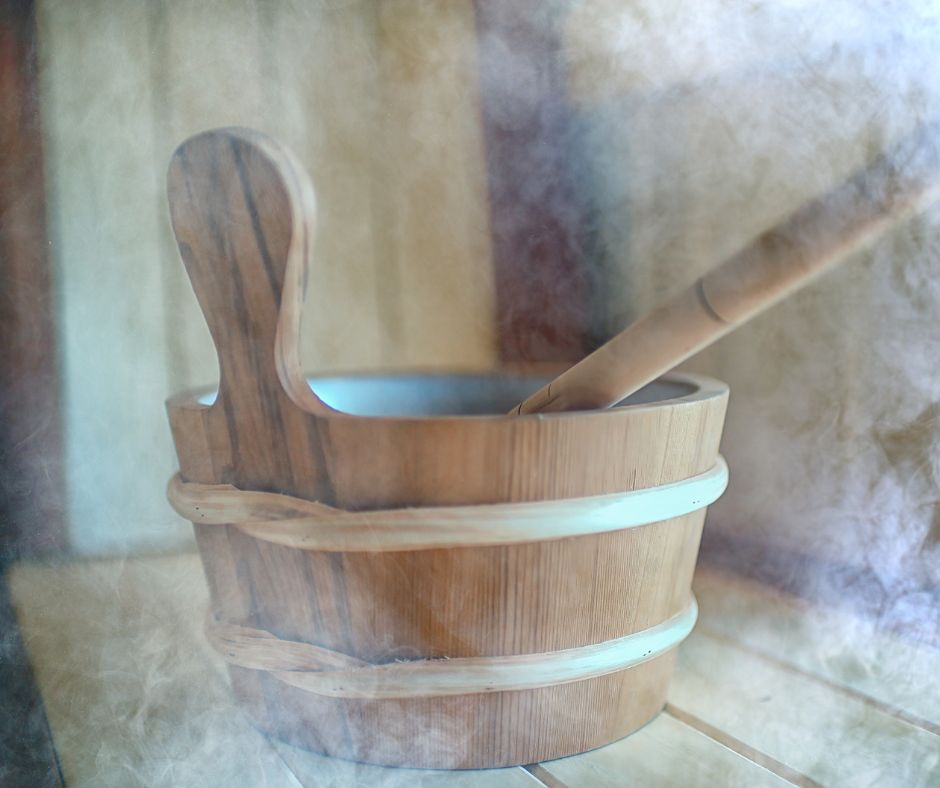
    Finally, there is one small courtesy: do not leave the bucket empty when you leave. Leaving an empty water bucket for the next person is bad manners. As you become familiar with Finnish sauna culture, you will notice that many Finns enjoy throwing löyly, and there can even be a playful competitive spirit. If someone loudly boasts about how well they tolerate heat, a mischievous Finn may throw a proper round of löyly to demonstrate where the true limits lie. This playful “smoking” is part of sauna humor: arrogance in the sauna tends to backfire.

    Responsible bathers, however, remember that too much heat is not healthy, sauna is not a competition. In the past, Finland even hosted world championships in sauna bathing, but they were discontinued after one finalist died and another was severely injured because neither was willing to give up.

    In summary: löyly is added in moderation and with consideration for others. Permission is asked, comfort is observed. If someone starts gasping in distress, a wise löyly thrower takes a break. These rules ensure that the sauna experience remains enjoyable for everyone. Nothing irritates a Finn in the sauna more than someone who breaks these customs… even if, in true Finnish fashion, few will say anything directly, preferring to complain later to a spouse or friend.

    Shower before the sauna – Hygiene above all

    Although the sauna is a place for cleansing, tradition dictates that one enters it clean. Today, this usually means washing or at least showering beforehand, especially if one is dirty or sweaty from the day’s work. Public saunas often display signs saying “wash before sauna,” but Finns do this automatically at home as well, at least rinsing off lightly. The idea is that clean skin sweats better and löyly feels more pleasant on a clean body. This also prevents dirt and grease from accumulating on the benches and stove stones.

    Hygiene also means that you do not wash yourself with soap during the löyly. Soaping and shampooing are done afterward, once the final rounds of löyly are complete, in the washing area or shower.

    One traditional rule is that food is not eaten in the sauna. A small exception exists in some cottage traditions, such as heating sausages wrapped in foil on the heater, so-called “kiuasmakkara”, which means: sausage grilled on a sauna heater, but these are usually eaten after the sauna session. Sauna experts note that eating in the heat is not pleasant anyway: a full stomach directs blood flow to digestion, which can make the heat uncomfortable. It is best to eat after sauna bathing.

    Cleanliness also includes avoiding strong scents and chemicals. Many Finns prefer a natural atmosphere in the sauna, so strong perfumes or aftershaves do not belong there. Some also argue against swimsuits for hygienic reasons: synthetic fabrics can release chemicals when heated, or at least smell unpleasant and feel uncomfortable. This is another reason why many Finns prefer to sauna naked or with a cotton towel at most.

    There is even a saying: “Wearing a swimsuit in the sauna is like taking a shower with an umbrella”… a humorous exaggeration that illustrates how unnecessary clothing feels in the sauna.

    Drunk in the Sauna? Preferably Not

    Beer and sauna are often linked in Finnish culture. For many, a sauna beer completes the evening after the löyly. But one unwritten law is worth remembering: do not go to the sauna heavily intoxicated.

    Alcohol as a mild social drink is fine, but sauna bathing while drunk is both unwise and dangerous. Statistics tell a grim story: in the 21st century, several hundred people in Finland have died after passing out in saunas, because of alcohol and nearly all of them were men.

    Alcohol combined with intense heat is a deadly mix that increases the risk of accidents. And safety is not the only concern. A heavily intoxicated sauna bather often disturbs others, becoming loud or unruly, which breaks traditional sauna peace.

    Sauna tradition holds that alcohol belongs after the löyly, not before. The Finnish Sauna Society also advises avoiding large meals and alcohol prior to sauna bathing. After the sauna, however, the body is relaxed and thirsty, then a cold beer or other drinks taste their best. This golden rule ensures both safety and enjoyment: you get far more out of the löyly when sober.

    Conclusion

    The unwritten laws of the Finnish sauna always aim at one goal: the well-being and comfort of everyone present. For Finns, the sauna is more than a place to wash, it is a sanctuary of equality, peace, and relaxation, where everyone can be themselves without fear of judgment. That is why one does not argue, so peace is preserved. That is why nudity is not stared at, so no one feels ashamed. That is why conversations stay within the sauna walls, so trust endures.

    These laws are not written in any statute book, but every Finn knows them instinctively. And if someone breaks them, we certainly notice, even if we do not say it out loud right away. The sauna crystallizes much of what it means to be Finnish: restraint, naturalness, honesty, and community. No wonder it is our national treasure, granted a special place in everyday life. As one opinion piece put it: “In the sauna, equality and mutual respect are emphasized. Sorrows are washed away, joys are shared, pains are spoken or silence is kept.”

    It is precisely because of this unique spirit that sauna bathing has no rules, except the unwritten ones described in this article.

    Have a good löyly and remember to behave according to the unwritten rules of the sauna.

    9.1.2026 by Toni Hannukainen

    FinSteam Oy / Saunística Domestic & Export sales
    Distributor networks
    Myynti Suomi
    © 2025 FinSteam Oy. All rights reserved Product Development Per toni@finsteam.fi +358 40 737 31 27 +34 656 87 49 38 Product Development & Manufacturing info@finsteam.fi per@finsteam.se Benny +358 50 563 3432 Toni Anders +358 50 345 2747 FinSteam Ab Product Development Stephan stephan@finsteam.se +46 70 828 5225 Location:
    Lingonvägen 11
    SE-44242 Kungälv
    Sweden
    Location:
    Penviksvägen 4
    FI-68600 Pietarsaari
    Finland
    +46 70 304 2228 Location:
    Lastvägen44
    SE-98138 Kiruna
    Sweden
    FinSteam Oy Location:
    Calle Miguel Hernández 3
    ES-29120 Alhaurin el Grande
    Spain
    © 2025 FinSteam Oy. All rights reserved
  • The Anatomy of the Perfect Löyly

    FinSteam full logo color

    sauna heaters expanding sauna culture about finsteam home sauna tents distributors articles Finsteam q&a eNGLISH SVENSKA SUOMEKSI Why Choose finnish sauna? ENG SWE FIN

    The Anatomy of the Perfect Löyly – The Heart of the Finnish Sauna

    The Finnish sauna is far more than a hot room. It is a space where one sheds not only clothing but noise, pressure and the world that constantly demands something in return. When the door closes, everyday life remains outside and what is left is warmth, a quiet hum, and a body that slowly awakens in a different way. 

    At the center of this experience lies something so deeply Finnish that no true equivalent exists in English – nor in nearly any other language. This word is LÖYLY.

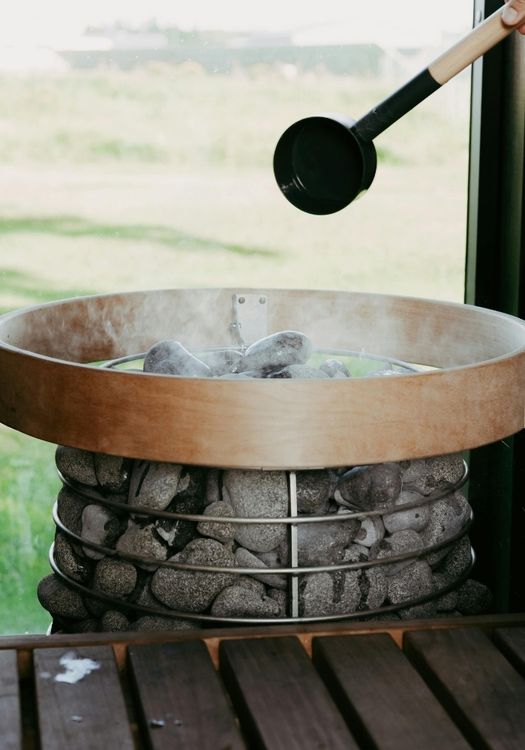
    Löyly is not simply hot air or steam, nor is it a mere combination of heat and humidity. It is an experience that surrounds, carries and restores. It is the soft union of warmth and moisture settling onto the skin like a living blanket that still breathes. The moment löyly truly begins is when water is thrown onto the heater’s fiercely hot stones, and that instant of contact transforms the water into a rising, living wave of steam that fills the room and awakens the entire sauna.

    If I had to describe the Finnish word löyly in English using one single sentence, I would put it like this:

    “Löyly is the living, breathing warmth that wraps around you like a gentle exhale of nature itself – a harmony of heat, humidity and presence that begins the moment water meets glowing stones, and that you don’t merely feel, but surrender into.”

    Löyly is therefore much more than temperature. It is atmosphere, space and state of mind. But where does perfect löyly come from, and why do some saunas feel almost sacred while others remain harsh, dry or suffocating?

    Everything begins with balance.

    Perfect löyly appears when heat, humidity and oxygen exist in harmony. The heat may be high as long as it does not cut or burn. The humidity may be rich as long as it does not overwhelm. The air must be fresh and circulating, never stagnant. For that reason, ventilation is the invisible heart of great löyly. It is not a technical afterthought but one of the most crucial elements of the sauna itself. Good airflow brings fresh air in, distributes heat evenly and gives the steam space to roll and breathe. Poor airflow turns the sauna heavy and stagnant, robbing löyly of its living character.

    Electric heaters

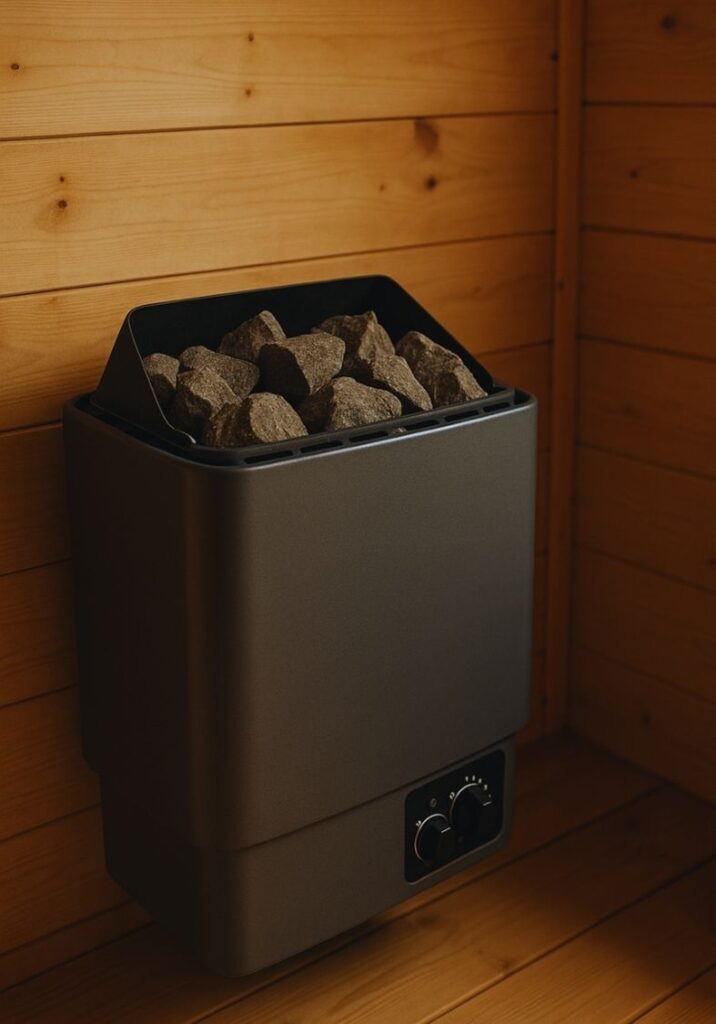
    The type of heater shapes the löyly experience, though the fundamental principles remain the same. An electric sauna heater produces steady, safe and easily controlled heat, typically ranging between 80 and 100 degrees Celsius. The temperature is stable and predictable, but achieving true löyly requires more than warmth alone. A properly sized heater relative to the room, a sufficiently large amount of stones and a well-designed air circulation system are all essential. Without these elements, an electric sauna can feel dry, harsh or empty.

    Small and inexpensive electric heaters – especially those with minimal stone capacity – often generate löyly that feels sharp, thin and overly dry. In contrast, wood-burning and LPG gas heaters naturally support the movement and quality of air in the sauna, producing a softer, more humid and more enveloping löyly.

    When choosing an electric heater, selecting a sufficiently powerful unit with a stone mass of at least 50 kilograms, and ideally closer to 100 kilograms, is the correct decision for anyone who wants to achieve genuinely high-quality löyly.

    A wood-burning sauna – the “real” sauna

    For many Finns, the wood-burning sauna heater is the true heart of the sauna — the most authentic way to experience heat, steam and the quiet presence that defines traditional sauna culture. The organic nature of fire produces warmth that is soft, alive and multidimensional in a way electric heat can never fully replicate. Wood burns in its own rhythm, and the heat it generates breathes with the sauna itself. Sometimes stronger, sometimes gentler — giving the löyly a depth and character that feels unmistakably natural.

    Wood-fired saunas typically operate between 70 and 90 degrees Celsius, some even enjoyed saunas at temperatures over 100 degrees Celsius, while for some only 60 degrees is a suitable sauna temperature.

    Though the experience itself is defined not by the number but by the quality of the heat. The large volume of stones allows löyly to rise slowly, smoothly and richly. A properly heated wood-burning heater produces steam that does not strike the skin, but instead rolls around the body like a warm, breathing blanket. The combustion process also enhances natural ventilation, drawing fresh air into the sauna and allowing the löyly to remain vibrant and constantly in motion.

    At its best, a wood-burning heater produces löyly that is humid, rounded and gently powerful, a living warmth that heats not just the air but the mood, the atmosphere and the person within the sauna. For this reason, many still consider the wood-burning sauna the most genuine and profound way to experience the essence of Finnish sauna culture: warmth, silence and the rhythm of nature woven together into a single moment.

    FinSteam LPG – heaters

    The FinSteam LPG sauna heater represents the modern evolution of Finnish sauna tradition – a next-generation solution that unites the living warmth of a wood-burning heater with the effortless usability of an electric heater. Unlike electric units, which rely on resistive elements, FinSteam produces its heat and steam through a real flame, creating a natural, soft and breathing löyly that electricity alone cannot replicate.

    The optimal temperature range for FinSteam is 65–85 degrees Celsius. Within this range, the living flame, the stone mass and the natural airflow created by combustion harmonize perfectly, producing steam that rises gently, breathes continuously and envelops the whole body in soft, balanced warmth.

    The unique strength of FinSteam lies in the natural air circulation generated by the burning flame itself. As combustion draws in fresh air, the sauna is continuously supplied with oxygen-rich airflow, preventing the steam from becoming heavy or stagnant. This mirrors the same dynamic that gives wood-burning saunas their famously soft and enveloping löyly — and it is the reason FinSteam so convincingly recreates the character of traditional wood-fired steam.

    Although the stone mass of an LPG heater is not as large as that of many wood-burning stoves, FinSteam still produces steam that is surprisingly fine, soft and continuous. The vapor does not hit the skin sharply but wraps around the body as a calm, even and breathing warmth. The living flame heats the stones quickly and evenly, giving the löyly a layered, organic softness reminiscent of a wood-fired sauna — yet with the ease of operation comparable to an electric heater.

    At its best, FinSteam’s löyly is the union of two worlds: the effortless simplicity of an electric sauna and the organic, breathing warmth of real fire. It is steam with both strength and softness, a löyly that neither burns nor suffocates but supports the breath and surrounds the body in natural calm. It carries the ancient heart of the Finnish sauna into the modern age.

    The structure of the sauna completes the experience.

    The wood, insulation, proportions of the room and the height of the benches all shape how löyly moves and where it forms. A sauna is never just a heater or a temperature but a whole, a system that can be built wisely or carelessly. A well-designed sauna sings; a poorly made one merely heats.

    In the end, perfect löyly is not born from engineering alone. It is also created by the person within the sauna – through breath, stillness, presence and the way warmth unlocks the body while steam quiets the mind. Perfect löyly is a moment in which something deep inside aligns, and a person returns to a fundamental state: warmth, calm, breath and silence.

    A sauna is never only a number on a thermometer or the structure of the room. It is an experience that lives equally in the physical and the emotional. It is the quiet core of Finnish well-being – and perfect löyly is the heartbeat at its center.

    It is the most beautiful ritual Finland has given the world.

    15.11.2025 by Toni Hannukainen

    FinSteam Oy / Saunística Domestic & Export sales
    Distributor networks
    Myynti Suomi
    © 2025 FinSteam Oy. All rights reserved Product Development Per toni@finsteam.fi +358 40 737 31 27 +34 656 87 49 38 Product Development & Manufacturing info@finsteam.fi per@finsteam.se Benny +358 50 563 3432 Toni Anders +358 50 345 2747 FinSteam Ab Product Development Stephan stephan@finsteam.se +46 70 828 5225 Location:
    Lingonvägen 11
    SE-44242 Kungälv
    Sweden
    Location:
    Penviksvägen 4
    FI-68600 Pietarsaari
    Finland
    +46 70 304 2228 Location:
    Lastvägen44
    SE-98138 Kiruna
    Sweden
    FinSteam Oy Location:
    Calle Miguel Hernández 3
    ES-29120 Alhaurin el Grande
    Spain
    © 2025 FinSteam Oy. All rights reserved