

The Law of the Sauna Benches – The Unwritten Rules of Finnish Sauna Culture
First of all, this article is quite long, so I hope you’ll have the stamina to read it all the way to the end.
Finland has a population of around 5.5 million people, and an estimated 3.3 million saunas. The sauna is an inseparable part of Finnish life: it is often said that in Finland “we sit on the sauna benches before we can walk or talk.” For Finns, sauna bathing is almost sacred, governed by many unwritten rules. These rules are passed down from generation to generation almost automatically, and nearly every Finn learns them as a child as part of their sauna upbringing. To outsiders they may seem confusing, but to Finns they are self-evident. It is therefore no surprise that Finnish sauna culture was added to UNESCO’s list of Intangible Cultural Heritage of Humanity in 2020.
There is a special atmosphere in the sauna, carefully protected by these unwritten laws. Many Finns see the sauna as a near-sacred space, a kind of “church of nature,” where both body and mind are cleansed.
A good sauna is a place where worries are washed away and the soul can rest. Below, I introduce a set of sauna “legal clauses” that Finns usually follow without ever stating them aloud. In the analysis of each rule, I explain why these customs are part of the Finnish sauna tradition.
Peace in the Löyly – Arguments do not belong in the Sauna
According to an old proverb, “one should behave in the sauna as in church,” meaning calmly and respectfully.
Sauna bathing is a moment of relaxation and purification, so everyday quarrels and loud arguments are left outside the löyly room. Arguments never belong in the sauna. If topics such as relationship problems or politics arise, even these should be discussed calmly so that the conversation does not escalate into a heated dispute next to the hot stove. Finns usually consciously avoid sensitive topics when sauna bathing with strangers. On the sauna benches, the aim is to preserve sauna peace: an unhurried, safe atmosphere where everyone can relax.
Historically, the sauna was even considered a sacred place. In the old days, people believed that a sauna elf guarded the sauna and would become angry if there was shouting or swearing inside. Stories tell that if someone behaved particularly badly in the sauna, the sauna elf might fly into a rage and even burn the whole sauna down. This folk belief reflects how highly sauna peace was valued. “You must not shout, or the sauna elf will get angry” is a rule many children, myself included, were taught. When a person enters the sauna, they are expected to leave everyday aggression and haste behind. One sits calmly, almost reverently, so that everyone can enjoy the gentle warmth of the löyly.
In practice, this means that people speak quietly in the sauna…. or, knowing Finns, sometimes not at all.

Sauna farts – Absolutely forbidden
Let’s admit it: the topic may provoke laughter, but it must be said aloud. Passing gas in the sauna is not only bad manners; it is also disrespectful toward others and therefore forbidden. In a small, hot space, smells intensify, and foul air floating among the löyly can ruin the entire sauna experience.
This rule, too, relates to the sauna’s special atmosphere of cleanliness and calm. Traditionally, the sauna has been a place of washing, almost a sacred chamber, where hygiene is respected. No one wants their enjoyment spoiled by unhygienic behavior. Therefore, polite sauna manners apply, and personal sound effects and odors are kept to private spaces. This is about both preventing unpleasant smells and maintaining general tact. A little restraint is a small price to pay for keeping the shared löyly moment enjoyable.
What is said in the Sauna stays in the Sauna
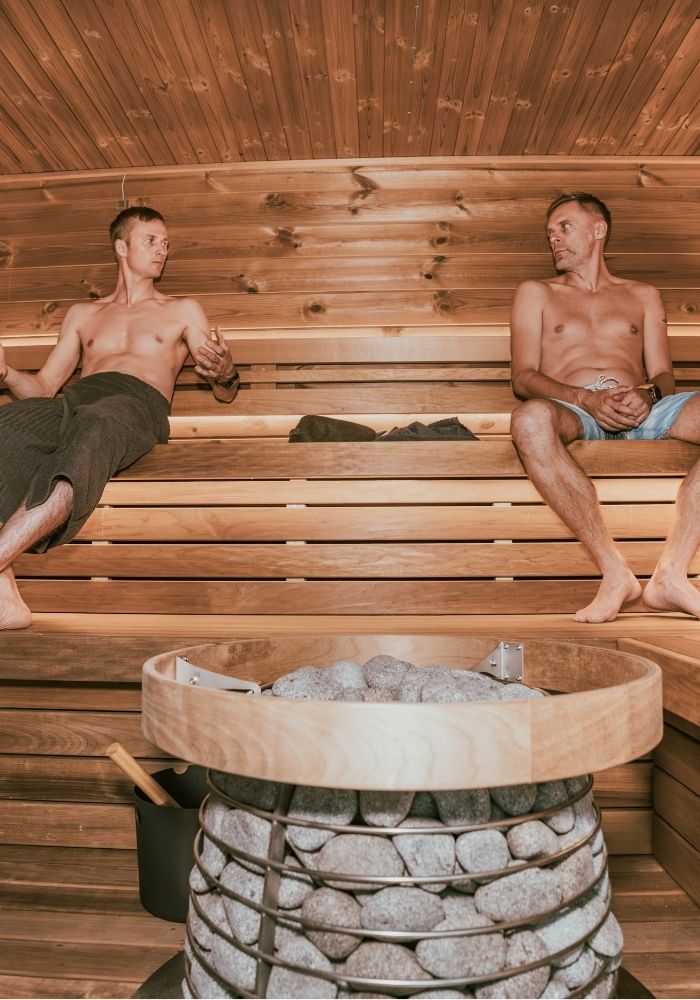
Conversations on the sauna benches can often be unusually deep. In the heat of the löyly, people relax and often open up about things they might not otherwise talk about. Finnish sauna culture follows an unwritten code of honor: “Like in Las Vegas, so in the sauna, what is said in the löyly stays there.”
This means that personal revelations or sensitive discussions heard in the sauna are not shared elsewhere. If someone opens up on the sauna benches, others respect this by keeping the conversation confidential.
This rule originates from the sauna’s role as a private communal space. In ancient Finnish tradition, the sauna was a place where people were born, illnesses were treated, and even the dead were washed, life’s most intimate moments occurred there. For this reason, the sauna was surrounded by an implicit promise of trust. Sorrows, joys, and pains were shared on the benches and listened to with compassion. Even today, many Finns believe that sauna evenings create a special bond between those present. What a friend reveals from the heart in the sauna stays within that circle. The sauna acts as a guardian of trust and people leave feeling lighter because they were able to speak and be heard without fear of gossip.
The soul pens on the Sauna benches – The Sauna as Finland’s confessional
The sauna is Finland’s confessional. This expression refers to the way the sauna functions much like a confessional in Catholic tradition: it is a place where people entrust their deepest thoughts and cleanse burdens from the heart. Especially for Finnish men, the sauna has traditionally been a place where emotions and difficult topics can be discussed more freely. In everyday life, a taciturn Finnish man may truly open his mouth only once he sits on the sauna benches with friends and then the topics are often serious. Amid the löyly, heartbreaking father–son conversations have taken place, relationship worries have been discussed among friends, and personal successes shared that one might not dare to boast about elsewhere.
Why does the sauna encourage openness?
One explanation is its relaxed, egalitarian environment, which I will discuss further later in this article. When physical formalities: clothes and titles are removed, many mental barriers disappear as well. People sit literally in the same space, sweaty and naked, which creates a sense of togetherness and equality. The calm atmosphere and physical well-being also relax the mind. It becomes easier to speak honestly and to listen. It is not uncommon for a famously reserved Finnish man to open up to a friend in the sauna in ways he never would at a bar counter or an office coffee table.

In the past, people said that “the sauna also washes the mind clean.” This is a kind of löyly therapy. As sweat flows and the heat relaxes the body, speech comes from the heart. It is no coincidence that many Finns consider sauna evenings the best moments for family discussions or for bringing friends closer together. The sauna is our confessional, without priests or ceremonies, simply and authentically.
However, this confessional effect only works if trust exists, meaning that what is said truly stays within the sauna walls. That is why the sauna has been a place where conflicts are resolved, important decisions made, and even business deals struck and peace built.
Titles are left with the clothes – in the Sauna everyone is equal
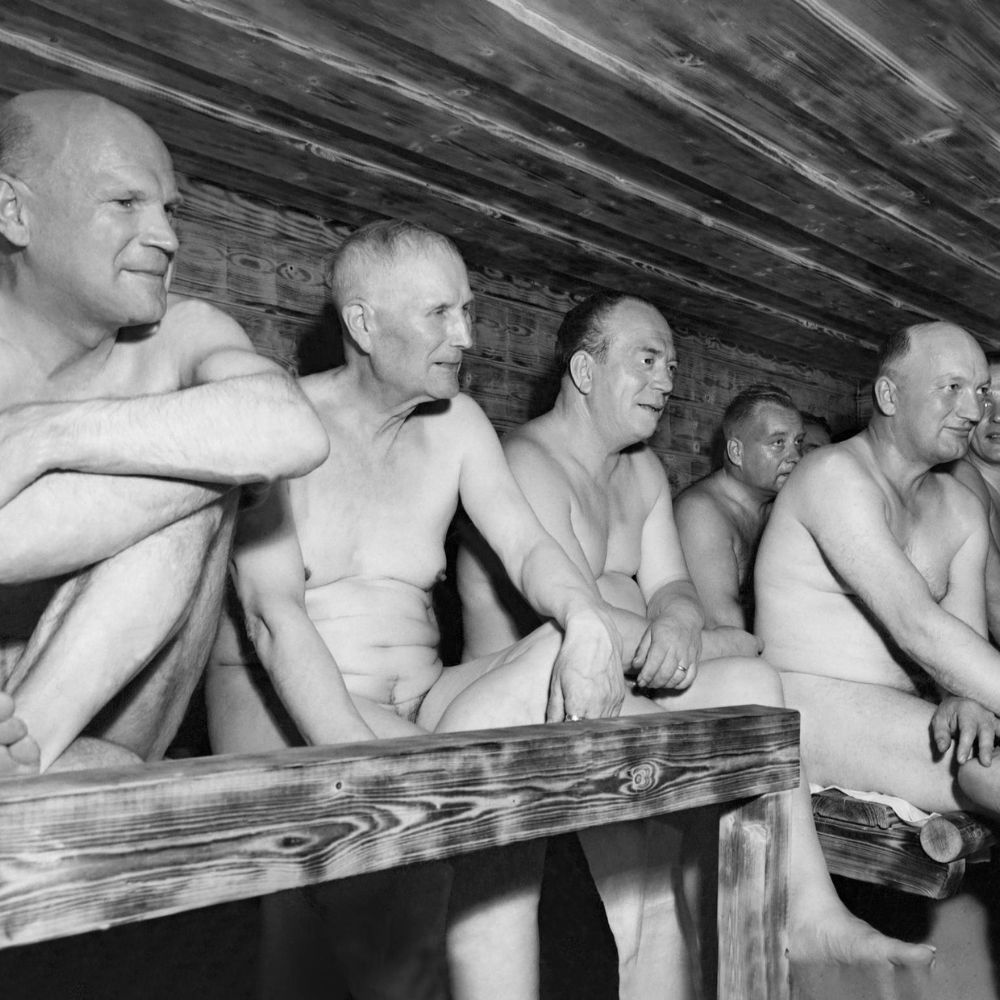
The sauna embodies democracy and equality. When a person enters the sauna, they remove not only their clothes but also their rank and titles. In the sauna, there are no titles or social classes, A Finnish saying states ”In the sauna, everyone is equal”. In practice, this means that in shared löyly, a CEO, a construction worker, a president, and a student sit side by side simply as people, enjoying the same sweaty pleasure.
Legendary President Urho Kekkonen famously used the sauna’s equalizing power in diplomacy. He often invited both domestic politicians and foreign leaders to sauna, reportedly saying that problems are easier to discuss on the sauna benches because everyone is equal there. “In the sauna there are no superpowers or small countries, no masters and servants. No one can hide politics up their sleeve when the sleeves are off,” Kekkonen aptly observed.
Promises made amid nudity and löyly were easier to keep, because they were made human to human, without everyday roles. From this emerged the concept of sauna diplomacy: The idea that even opposing parties can more easily find common ground in the sauna.
This principle of equality also appears in everyday sauna moments. In workplace sauna evenings, hierarchies often dissolve: a boss and an employee may talk casually, without the stiffness imposed by titles. On the sauna benches, everyone is simply a person among others. This builds trust and team spirit. There is even a Finnish saying, “I didn’t recognize you with your clothes on,” humorously describing how familiar someone becomes naked in the sauna, so much so that they seem almost unrecognizable when dressed.
This unwritten law explains why Finns are rarely embarrassed about mixed-gender sauna bathing: no one feels “above” or “below” anyone else. When social status differences are symbolically wiped away, it becomes easier to meet others without prejudice.
Naked in the Sauna – But without hidden intentions
One of the best-known and most surprising features of Finnish sauna culture for foreigners is the complete naturalness of nudity. In the sauna, nudity is normal and has nothing to do with sex. For Finns, it is self-evident to remove clothes before going to the sauna. Family members, friends, and sometimes mixed groups sauna naked together, and there is nothing strange about it. Naked, but not inappropriate, describes the situation well: no naked body is an object of staring or judgment in the sauna. Every body is equally valuable in the löyly, and nudity is seen as a natural part of sauna bathing.
For many foreigners, especially those from more conservative, Catholic-influenced cultures, this relaxed attitude toward nudity can be difficult to understand. For example, certain American anxieties around nudity partly stem from Catholic thinking, where nudity is associated with shame or sin. In Finland, by contrast, the sauna has always been an extension of the home: a place for washing and relaxation, where removing clothes is a practical act, not a moral statement. There are no lewd jokes, suggestive glances, or propositions in the sauna. Such behavior is extremely inappropriate and a blatant violation of sauna peace.
Of course, Finns understand if a foreigner feels shy. In many public saunas, tourists are allowed to wear a swimsuit or at least keep a towel wrapped around them if that makes them more comfortable. There is even a playful saying: “You go to the sauna to show off the magnificent naked Finnish body”—an exaggeration meant to convey that there is no need for embarrassment, as no one is judging.
“Even in a public sauna, no one needs to be ashamed of their body”; ultimately, we all look quite similar without clothes. Nudity is seen as equalizing: anyone can relax when there is nothing to hide… quite literally.
It is important to note that this norm of nudity does not imply coercion. Finnish etiquette is flexible: if someone prefers to wear a towel, it is usually not made into an issue. Especially in mixed-gender saunas among friends, it may be agreed that towels or swimsuits are used if that increases everyone’s comfort. More often, however, trust prevails: when everyone understands that nudity has no sexual meaning, sauna bathing naked feels natural, like Adam and Eve, but with completely innocent minds. Finns grow up with this from a young age; children learn early on that being naked in the sauna is nothing special.
The contrast with the rest of the world can be striking. A Finnish friend who studied in USA once told how american students asked in disbelief, “Why are people naked in the sauna? Do you have sex there?” The question amuses Finns, because nudity in the sauna is pure and neutral. Friends or colleagues can sauna naked together without any ulterior motives. The sauna’s special nature explains this: it is a place for washing and relaxation, like a large shared bathroom, where eroticism exists only if the bathers themselves want it, such as a couple in their own home sauna. In public or group saunas, such thoughts would not even occur.
Bare skin quickly adapts to the heat and löyly, and many foreigners eventually admit that naked sauna bathing feels liberating once the initial awkwardness fades. That, too, is part of the magic of the Finnish sauna.
Löyly with permission – The “Thrower” rules the Sauna heater
Throwing water on the sauna heater is one of the core rituals of sauna bathing, but in Finland it follows a specific etiquette. You should not throw löyly without first asking permission if others are present. According to an unwritten rule, the person who arrived first or the eldest bather, acts as the primary löyly thrower and sets the pace.
In public saunas, there is also a hierarchy: an older bather, such as a war veteran or a clearly elderly man, has the privilege of throwing löyly whenever he wishes. Courtesy still applies, but younger people respectfully give way. This is part of Finnish sauna culture: respect for others, especially elders who have the most experience in the world of löyly.
Another aspect of löyly etiquette is not complaining unnecessarily. If you cannot tolerate strong heat, do not climb to the upper benches just to show off. Lower benches are cooler, and no one will truly judge you for sitting there… though you might hear a few teasing comments about being soft.
A Finnish sauna saying exists in English as well: “If you can’t stand the heat, stay out of the sauna.” If the löyly feels overwhelming, move to the lower bench or step outside to cool down. This also means that if you throw löyly yourself, you must endure it, you cannot be the first to flee once it gets too hot.
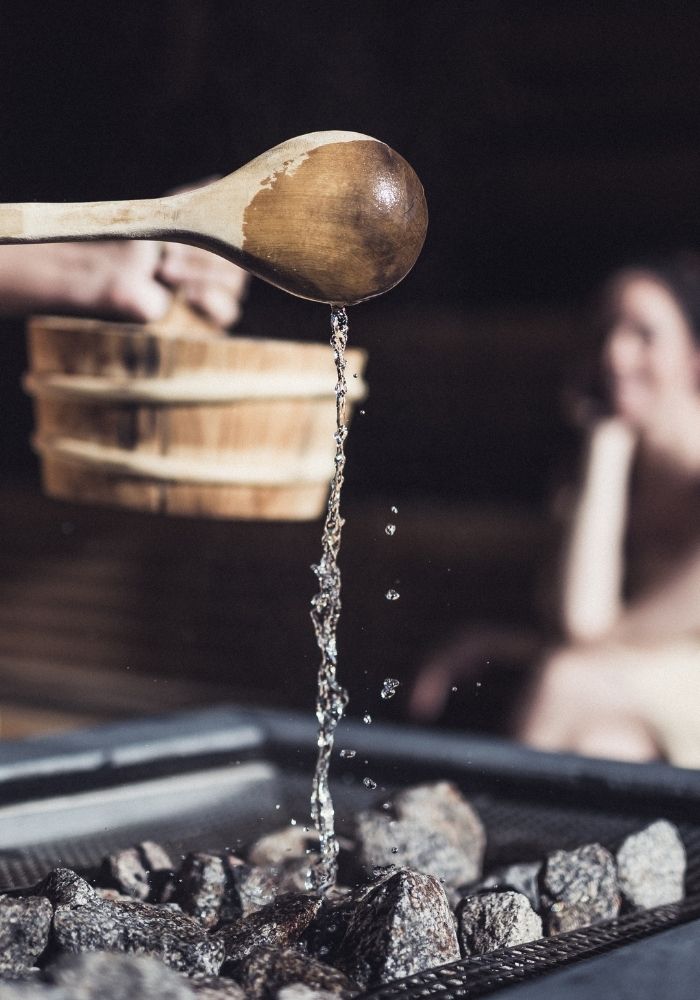
Finally, there is one small courtesy: do not leave the bucket empty when you leave. Leaving an empty water bucket for the next person is bad manners. As you become familiar with Finnish sauna culture, you will notice that many Finns enjoy throwing löyly, and there can even be a playful competitive spirit. If someone loudly boasts about how well they tolerate heat, a mischievous Finn may throw a proper round of löyly to demonstrate where the true limits lie. This playful “smoking” is part of sauna humor: arrogance in the sauna tends to backfire.
Responsible bathers, however, remember that too much heat is not healthy, sauna is not a competition. In the past, Finland even hosted world championships in sauna bathing, but they were discontinued after one finalist died and another was severely injured because neither was willing to give up.
In summary: löyly is added in moderation and with consideration for others. Permission is asked, comfort is observed. If someone starts gasping in distress, a wise löyly thrower takes a break. These rules ensure that the sauna experience remains enjoyable for everyone. Nothing irritates a Finn in the sauna more than someone who breaks these customs… even if, in true Finnish fashion, few will say anything directly, preferring to complain later to a spouse or friend.

Shower before the sauna – Hygiene above all
Although the sauna is a place for cleansing, tradition dictates that one enters it clean. Today, this usually means washing or at least showering beforehand, especially if one is dirty or sweaty from the day’s work. Public saunas often display signs saying “wash before sauna,” but Finns do this automatically at home as well, at least rinsing off lightly. The idea is that clean skin sweats better and löyly feels more pleasant on a clean body. This also prevents dirt and grease from accumulating on the benches and stove stones.
Hygiene also means that you do not wash yourself with soap during the löyly. Soaping and shampooing are done afterward, once the final rounds of löyly are complete, in the washing area or shower.
One traditional rule is that food is not eaten in the sauna. A small exception exists in some cottage traditions, such as heating sausages wrapped in foil on the heater, so-called “kiuasmakkara”, which means: sausage grilled on a sauna heater, but these are usually eaten after the sauna session. Sauna experts note that eating in the heat is not pleasant anyway: a full stomach directs blood flow to digestion, which can make the heat uncomfortable. It is best to eat after sauna bathing.
Cleanliness also includes avoiding strong scents and chemicals. Many Finns prefer a natural atmosphere in the sauna, so strong perfumes or aftershaves do not belong there. Some also argue against swimsuits for hygienic reasons: synthetic fabrics can release chemicals when heated, or at least smell unpleasant and feel uncomfortable. This is another reason why many Finns prefer to sauna naked or with a cotton towel at most.
There is even a saying: “Wearing a swimsuit in the sauna is like taking a shower with an umbrella”… a humorous exaggeration that illustrates how unnecessary clothing feels in the sauna.
Drunk in the Sauna? Preferably Not
Beer and sauna are often linked in Finnish culture. For many, a sauna beer completes the evening after the löyly. But one unwritten law is worth remembering: do not go to the sauna heavily intoxicated.
Alcohol as a mild social drink is fine, but sauna bathing while drunk is both unwise and dangerous. Statistics tell a grim story: in the 21st century, several hundred people in Finland have died after passing out in saunas, because of alcohol and nearly all of them were men.
Alcohol combined with intense heat is a deadly mix that increases the risk of accidents. And safety is not the only concern. A heavily intoxicated sauna bather often disturbs others, becoming loud or unruly, which breaks traditional sauna peace.
Sauna tradition holds that alcohol belongs after the löyly, not before. The Finnish Sauna Society also advises avoiding large meals and alcohol prior to sauna bathing. After the sauna, however, the body is relaxed and thirsty, then a cold beer or other drinks taste their best. This golden rule ensures both safety and enjoyment: you get far more out of the löyly when sober.

Conclusion
The unwritten laws of the Finnish sauna always aim at one goal: the well-being and comfort of everyone present. For Finns, the sauna is more than a place to wash, it is a sanctuary of equality, peace, and relaxation, where everyone can be themselves without fear of judgment. That is why one does not argue, so peace is preserved. That is why nudity is not stared at, so no one feels ashamed. That is why conversations stay within the sauna walls, so trust endures.
These laws are not written in any statute book, but every Finn knows them instinctively. And if someone breaks them, we certainly notice, even if we do not say it out loud right away. The sauna crystallizes much of what it means to be Finnish: restraint, naturalness, honesty, and community. No wonder it is our national treasure, granted a special place in everyday life. As one opinion piece put it: “In the sauna, equality and mutual respect are emphasized. Sorrows are washed away, joys are shared, pains are spoken or silence is kept.”
It is precisely because of this unique spirit that sauna bathing has no rules, except the unwritten ones described in this article.
Have a good löyly and remember to behave according to the unwritten rules of the sauna.
9.1.2026 by Toni Hannukainen
Distributor networks
Myynti Suomi
Lingonvägen 11
SE-44242 Kungälv
Sweden
Penviksvägen 4
FI-68600 Pietarsaari
Finland
Lastvägen44
SE-98138 Kiruna
Sweden
Calle Miguel Hernández 3
ES-29120 Alhaurin el Grande
Spain
